How Spotify Changed The Music Business – For Better And Worse
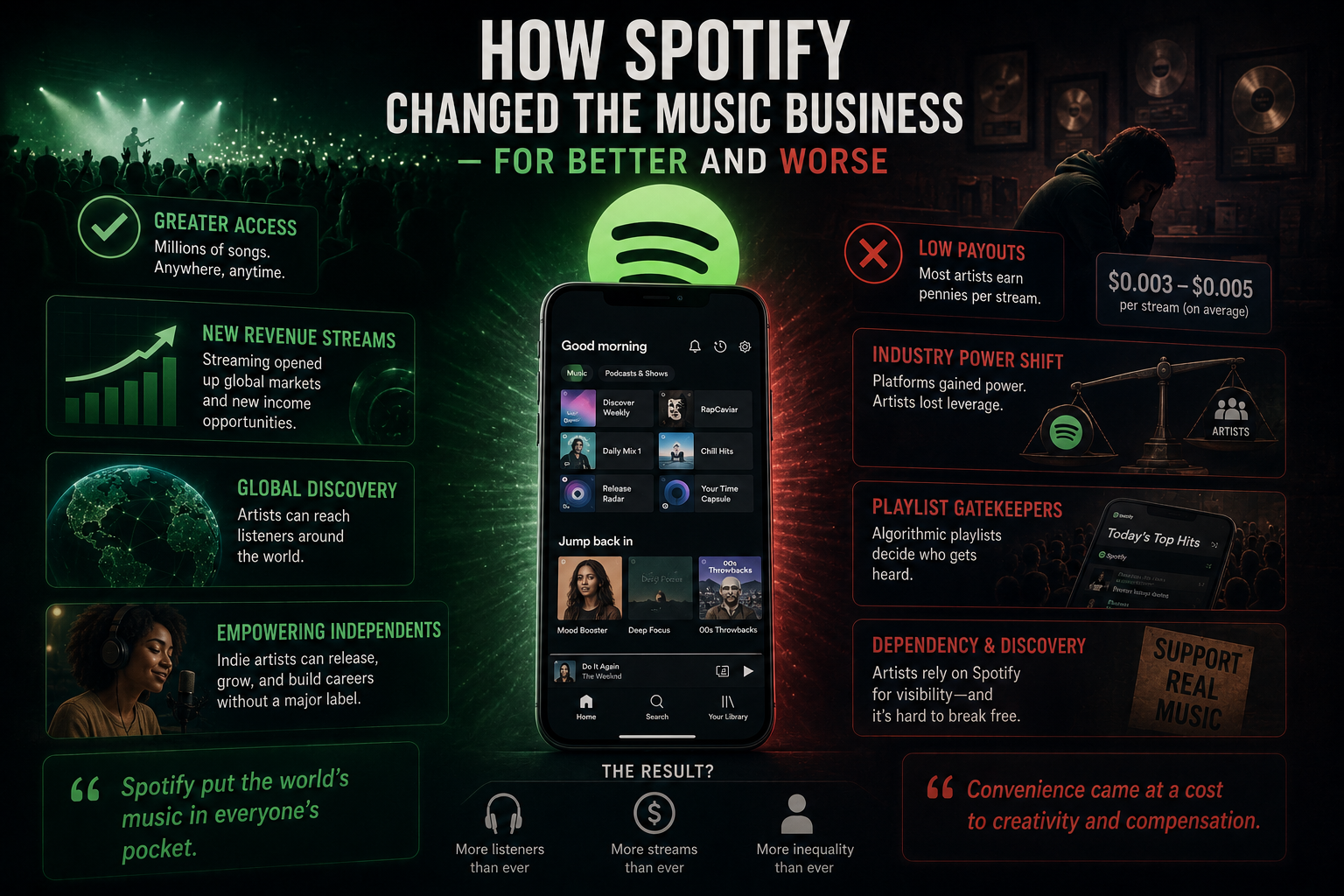
How Spotify Changed The Music Business — For Better And Worse
Music has always evolved alongside technology. From vinyl records and cassette tapes to CDs and digital downloads, every generation has experienced a shift in how music is consumed. Few innovations, however, have changed the industry as dramatically as Spotify.
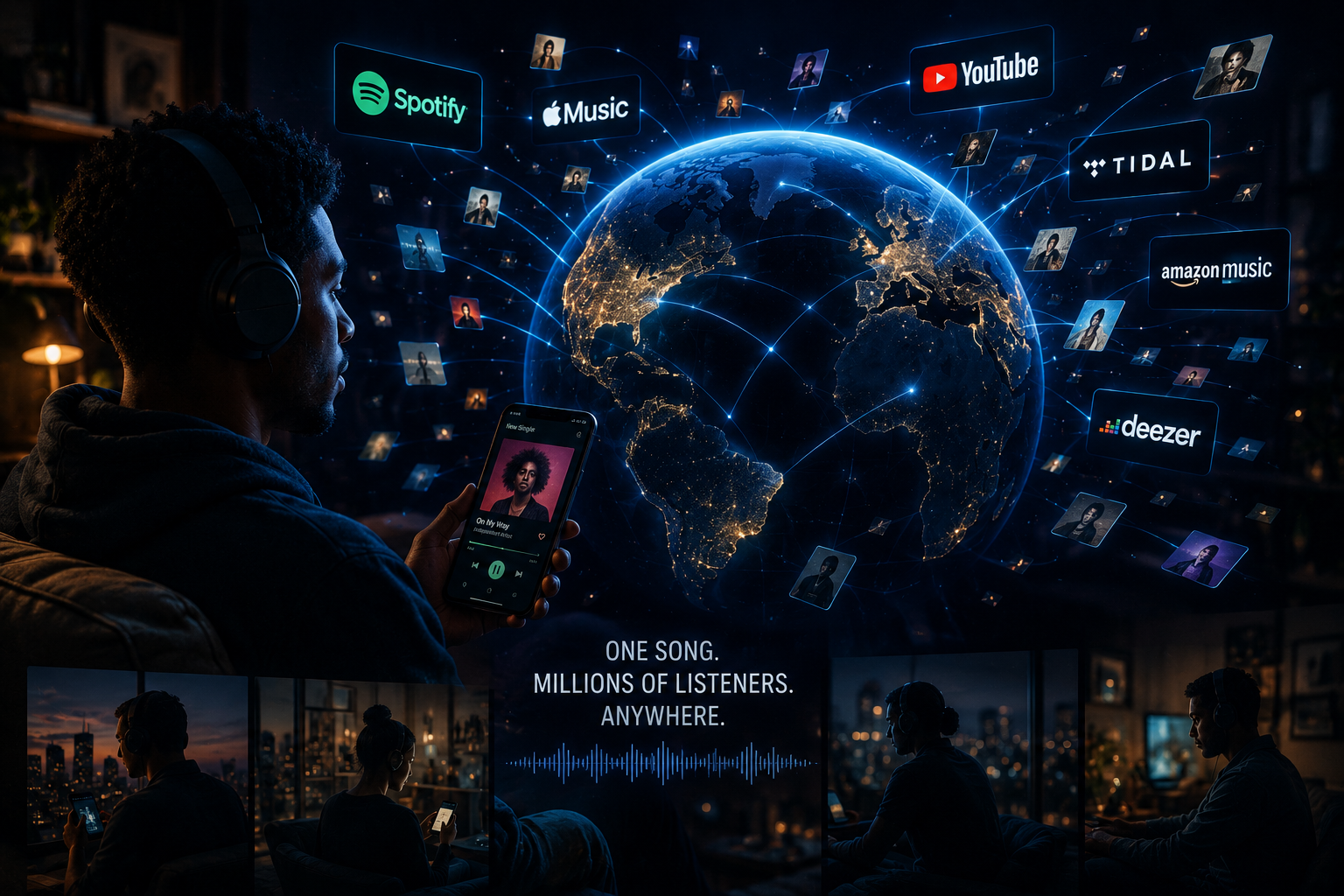
Today, Spotify is one of the most influential music streaming platforms in the world. It has given independent artists unprecedented access to listeners while fundamentally changing how music is released, discovered, and monetized.
For better or worse, Spotify transformed the music business forever.
How Spotify Started
Spotify was founded in 2006 by Daniel Ek and Martin Lorentzon in Sweden.
At the time, the music industry was facing a crisis. CD sales were collapsing, and piracy websites had conditioned millions of people to expect music for free. Record labels were losing billions of dollars, and there was no clear solution in sight.
Spotify’s answer was simple: make music easier to access legally than illegally.
When the platform launched, users could instantly listen to millions of songs without downloading files or purchasing albums individually. For consumers, it felt revolutionary. Instead of paying for one CD or one song at a time, listeners suddenly had access to nearly unlimited music for a small monthly subscription.
The model worked.
Spotify expanded across Europe, entered the United States, and became one of the most influential companies in modern music.
The End Of The Album Era
Before streaming, artists often focused on complete albums.
Fans would purchase a project, listen to it repeatedly, and spend time with the music. Albums created moments. Release dates felt like events.
Spotify changed that behavior.
Listeners gained access to virtually every artist ever recorded. Instead of buying an album and living with it for months, users could instantly jump between thousands of songs.
As a result, individual tracks became more important than full projects.
Playlist placements began driving discovery. Singles became more valuable. Attention spans became shorter.
Many artists responded by releasing music more frequently instead of disappearing for years between album cycles.
The Rise Of Playlist Culture
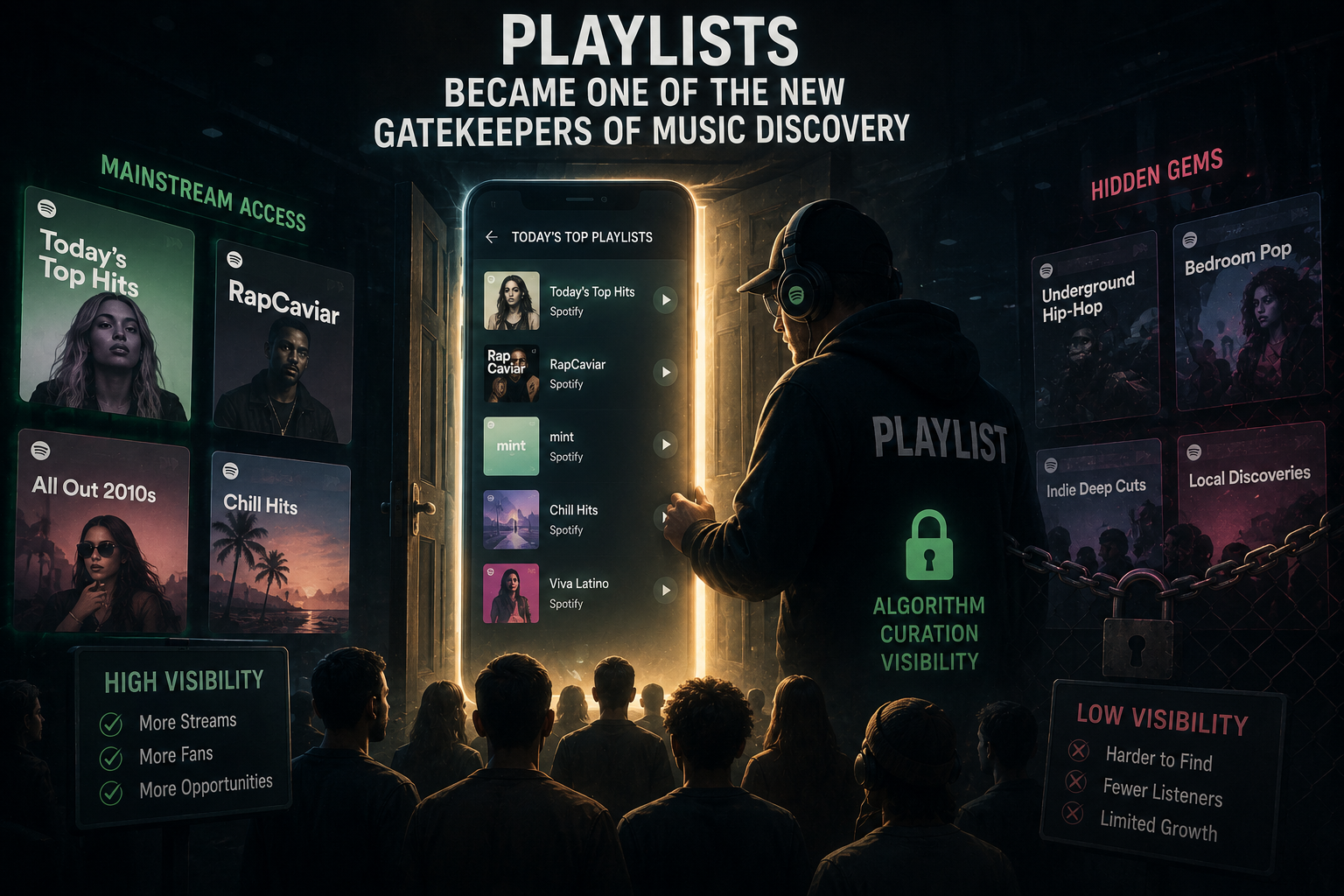
One of Spotify’s most powerful features is its playlist ecosystem.
Editorial playlists, algorithm-driven playlists, and user-created playlists now influence what millions of people hear every day.
Landing on a major playlist can expose an artist to thousands — or even millions — of new listeners overnight.
For independent artists, this creates opportunities that previously didn’t exist.
Years ago, radio stations and record labels acted as gatekeepers. Today, a relatively unknown artist can build an audience through streaming platforms without traditional industry support.
At the same time, playlist culture has changed listener behavior.
Many users no longer search for artists. They search for moods, activities, and moments: workout playlists, study playlists, driving playlists, relaxation playlists.
As a result, listeners often remember the playlist more than the artist behind the song.
How Spotify Helps Independent Artists
Despite criticism, Spotify has created opportunities that were unimaginable twenty years ago.
Artists can now distribute music globally without a record deal.
A musician in Tampa can release a song on Friday and have it available in New York, Germany, France, Brazil, Japan, and Australia within hours.
Distribution costs have fallen dramatically. Marketing tools are more accessible. Data and analytics help artists understand where their audiences live and how fans discover their music.
Spotify also gives independent artists the ability to build audiences organically.
Many careers have been launched through streaming without major-label backing.
For creators willing to learn marketing, branding, and audience development, Spotify has become a powerful tool.
The Problem For Smaller Artists
The biggest criticism of Spotify has always been compensation.
While streaming created access, it also dramatically reduced the amount of money generated per listener compared to previous eras.
When someone bought a CD, the artist received revenue from an entire album purchase.
With streaming, revenue is generated one play at a time.
That creates a difficult reality for smaller artists.
An artist can accumulate thousands of streams and still earn relatively little income.
Many independent musicians discover that streaming alone is rarely enough to sustain a career.
Instead, artists increasingly rely on multiple revenue streams:
- Live performances
- Merchandise sales
- Licensing opportunities
- Crowdfunding
- Brand partnerships
- Direct-to-fan sales
For most independent artists, Spotify functions as a discovery platform rather than a primary source of income.
Understanding Streaming Payouts
Spotify does not pay a fixed rate per stream.
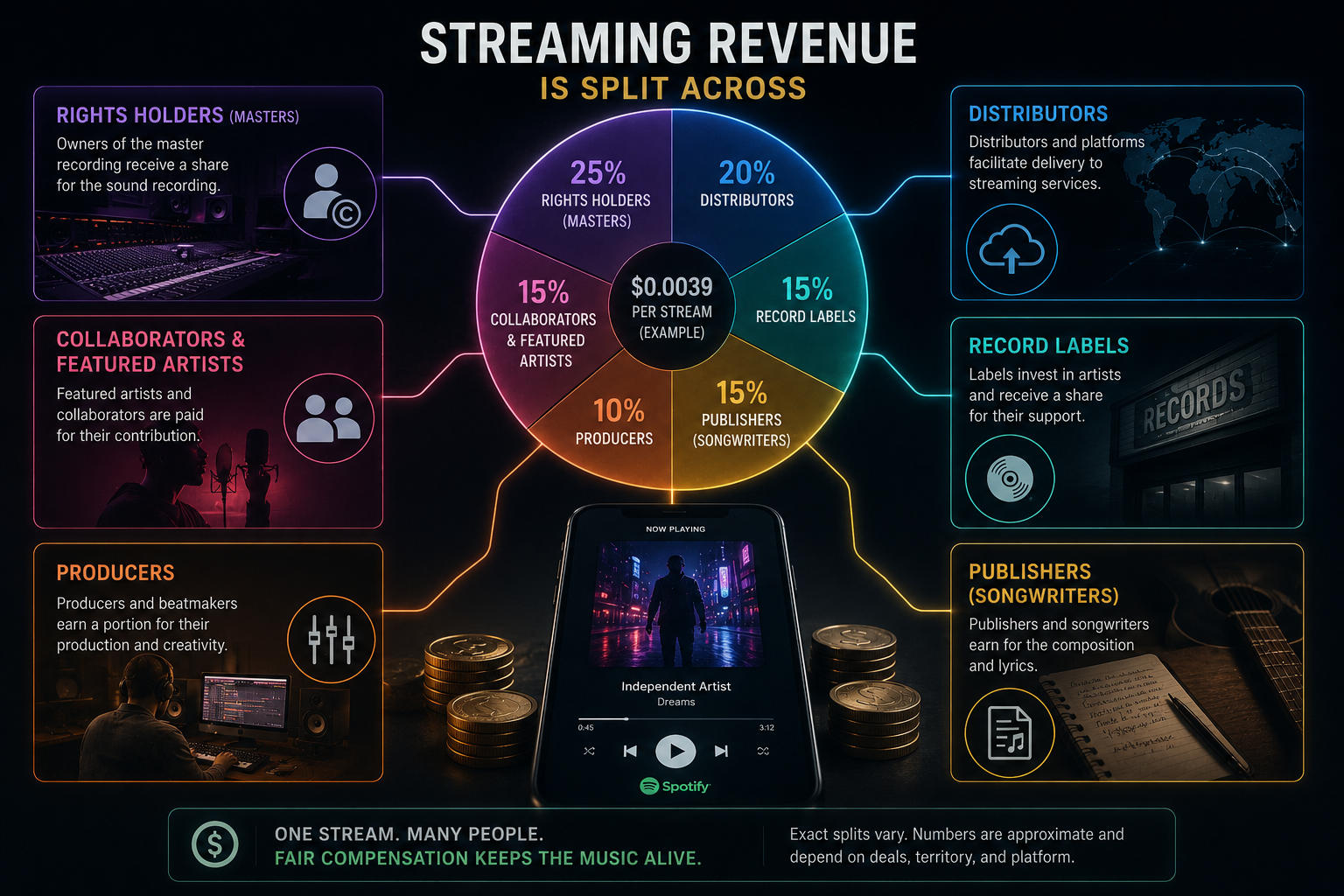
Payments vary based on subscription revenue, listener location, advertising revenue, rights ownership, and whether the listener is using a free or premium account.
Industry estimates often place Spotify’s payout somewhere between approximately $0.003 and $0.005 per stream.
Estimated Spotify Payouts
- 1,000 Streams: $3 – $5
- 10,000 Streams: $30 – $50
- 100,000 Streams: $300 – $500
- 1 Million Streams: $3,000 – $5,000
It is important to remember that these amounts are typically paid to rights holders first. Depending on contracts, managers, distributors, labels, publishers, producers, and collaborators may all receive portions of that revenue.
Why International Streams Matter
Not all streams generate the same value.
Premium subscribers generally generate higher payouts than free users supported by advertising.
Countries with stronger subscription markets often produce higher average payouts than regions where advertising-supported listening dominates.
This means 100,000 streams from one country may generate significantly different revenue than 100,000 streams from another.
For independent artists, international audiences can be incredibly valuable because they increase overall reach and open opportunities for merchandise sales, touring, and future growth.
Many artists discover that their strongest fan bases are located outside of the United States.
The New Reality Of Music
Spotify didn’t destroy the music business.
It changed it.
The platform made music more accessible than ever before while simultaneously creating new challenges for artists trying to earn a living.
Listeners gained unlimited access. Artists gained global distribution.
The tradeoff was increased competition and lower per-listener revenue.
Today, success is no longer determined solely by talent or access to a recording studio.
Artists must understand branding, content creation, audience building, and digital marketing in addition to making music.
Final Thoughts
Spotify solved one of the music industry’s biggest problems: how to deliver music legally and conveniently in the digital age.
At the same time, it created a marketplace where millions of artists compete for attention every day.
For listeners, the result has been extraordinary access.
For artists, the result has been both opportunity and frustration.
The lesson isn’t that Spotify is good or bad.
It’s that Spotify changed the rules.
And the artists who understand those new rules are the ones most likely to thrive in the modern music business.