The Best AI Tools For Independent Musicians
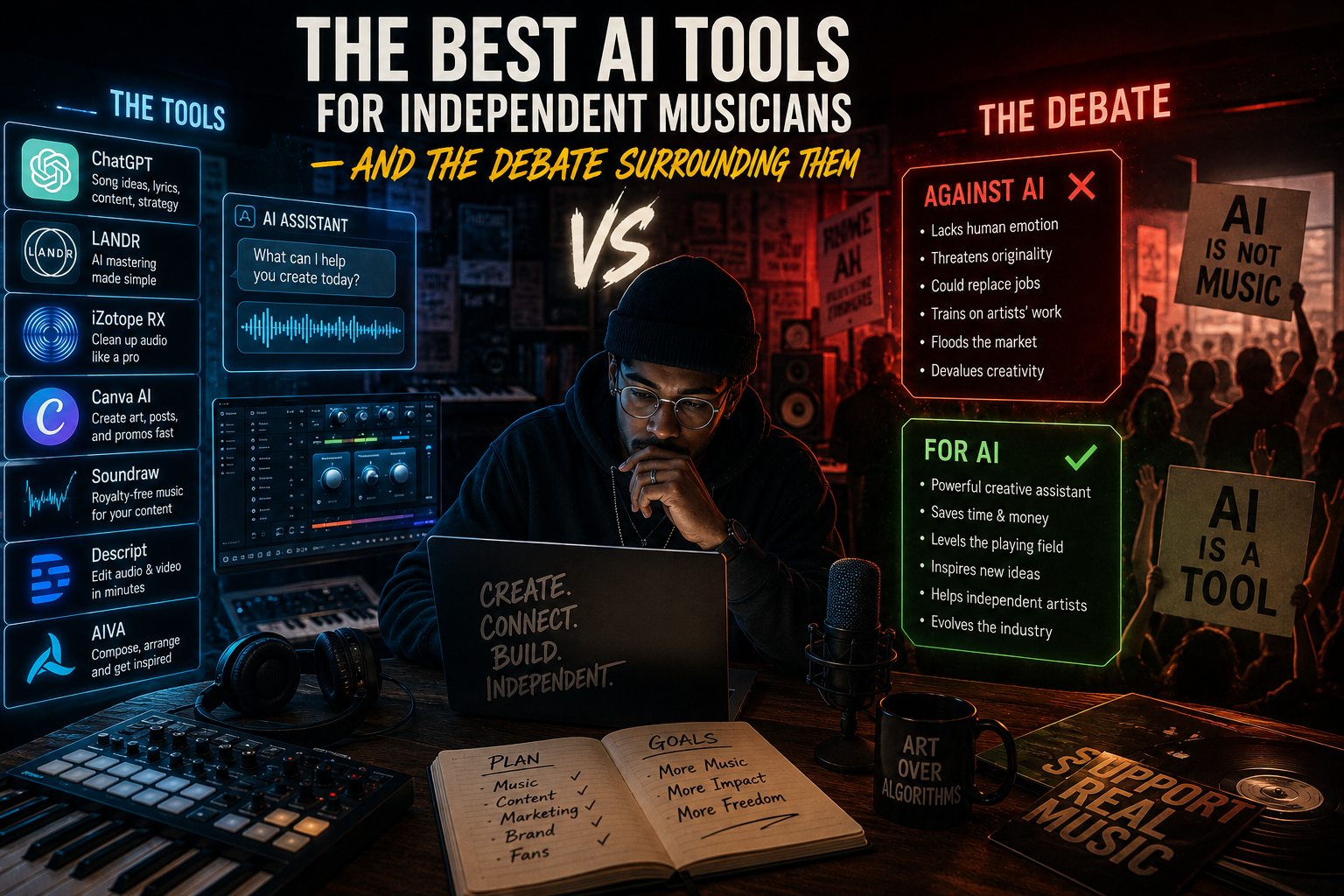
The Best AI Tools For Independent Musicians — And The Debate Surrounding Them
Artificial intelligence has quickly become one of the most controversial topics in music.
Some artists see AI as a powerful assistant capable of saving time, reducing costs, and helping independent creators compete with major labels. Others view it as a threat to creativity, originality, and the human element that has always driven great music.
The truth likely falls somewhere in the middle.
AI isn’t replacing artists anytime soon. But it is changing the way music is created, marketed, and managed. For independent musicians juggling recording, promotion, content creation, and business responsibilities, artificial intelligence is becoming another tool in the toolbox.
The question isn’t whether AI will impact music.
The question is how artists choose to use it.
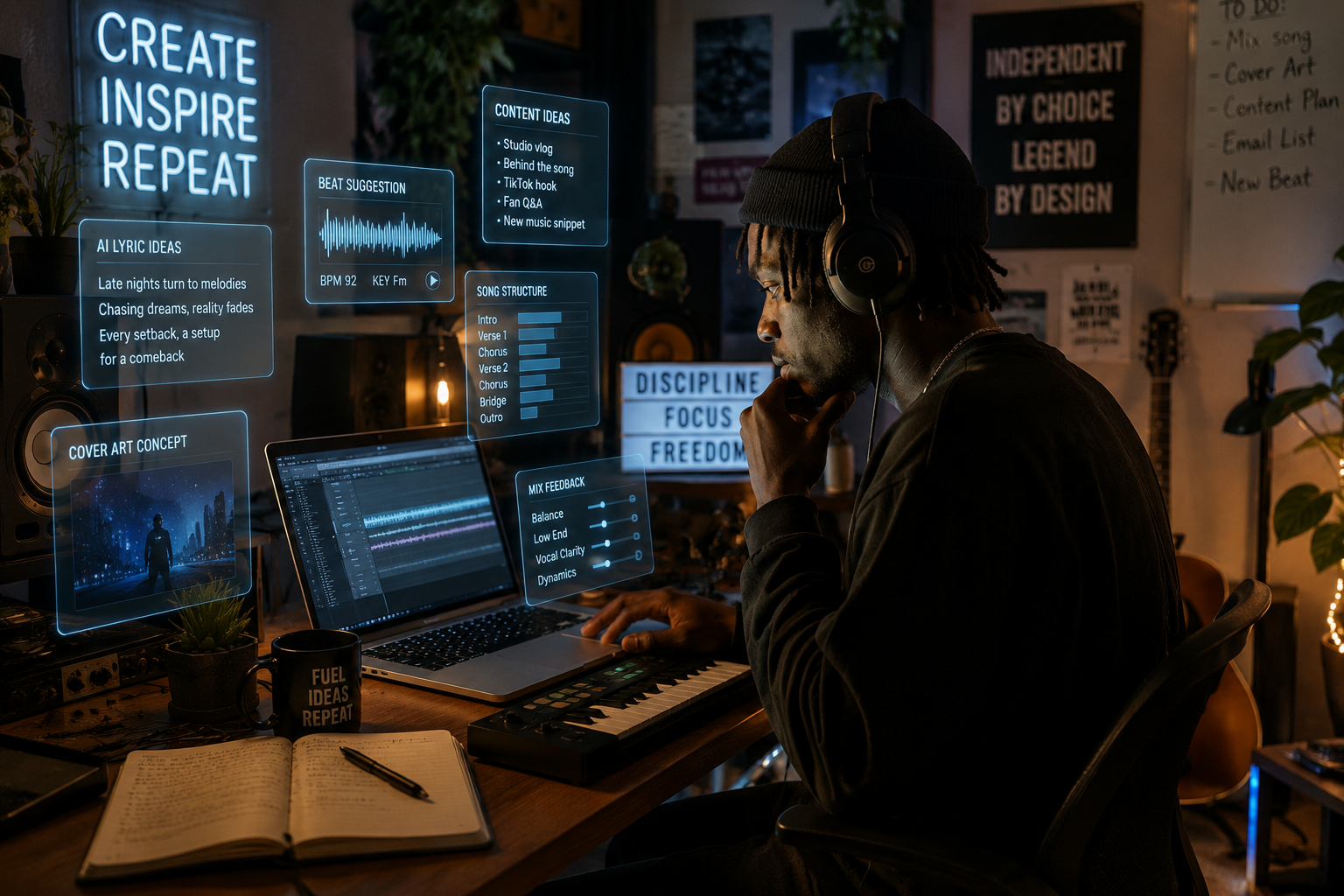
The Argument Against AI
Critics of AI in music often raise legitimate concerns.
Music has always been deeply personal. Great songs are built from lived experiences, emotions, relationships, victories, and failures. Many artists fear that relying too heavily on artificial intelligence could remove the authenticity that makes music meaningful.
Others worry about originality.
If AI is trained on existing works, where does inspiration end and imitation begin?
Some artists also believe that AI-generated music could flood streaming platforms with low-quality content, making it even harder for human creators to stand out.
For musicians who value craftsmanship, there is concern that technology could encourage shortcuts instead of skill development.
These concerns aren’t without merit.
Music has never been purely about efficiency.
It’s about connection.
The Argument For AI
Supporters see things differently.
They argue that every generation of musicians has adopted new technology.
Multi-track recording was once controversial. Drum machines were criticized. Auto-Tune was mocked. Digital recording changed entire studios.
Yet each innovation eventually became part of modern music production.
AI, they argue, is simply the next evolution.
Most artists aren’t using AI to write entire albums.
They’re using it to solve problems.
Creating cover art. Generating social media content. Cleaning audio recordings. Organizing marketing campaigns. Brainstorming ideas. Managing business tasks.
In that sense, AI becomes less of a replacement and more of an assistant.
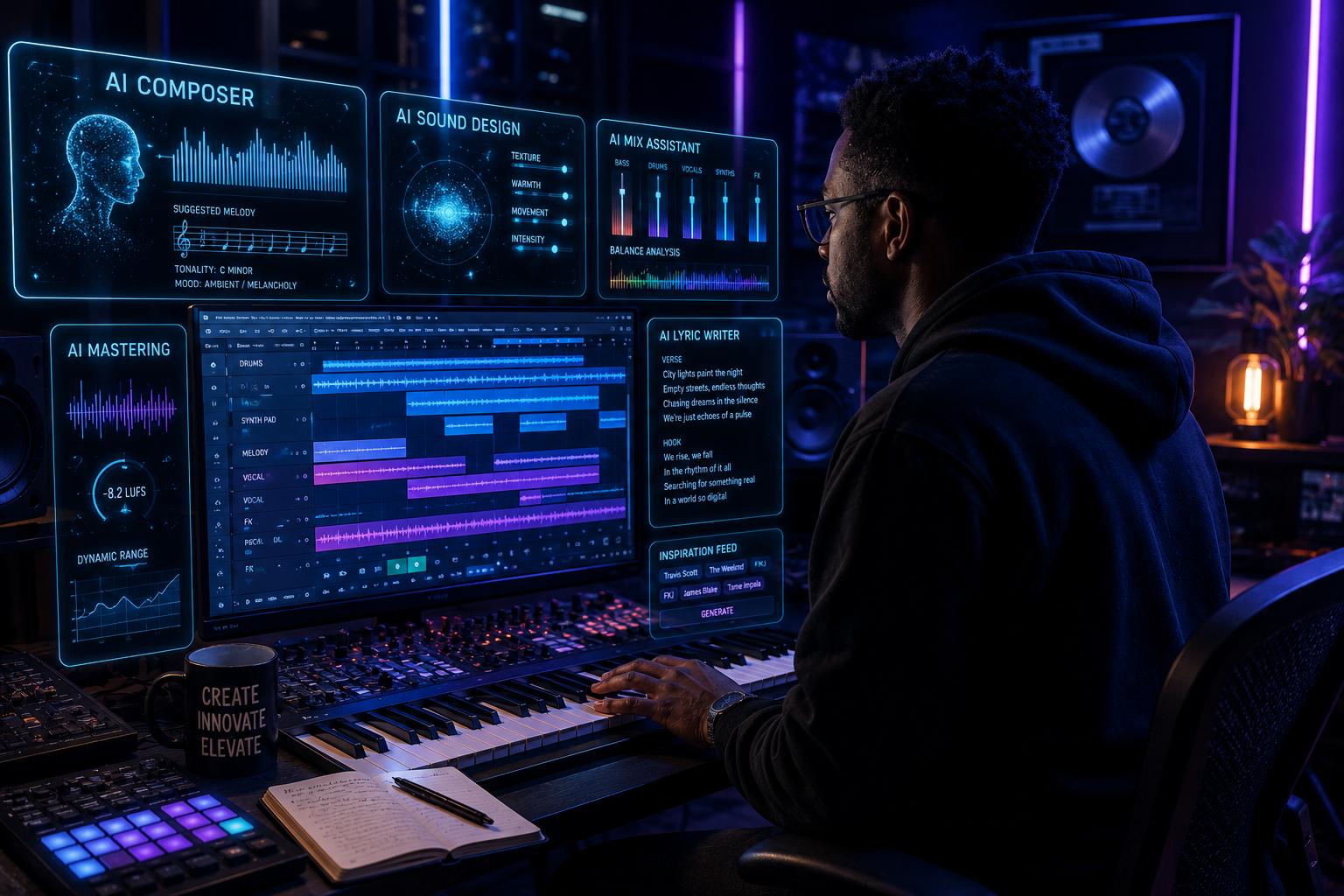
The Real Opportunity: Saving Time
Independent artists wear more hats than ever before.
On any given day, a musician may be recording music, mixing songs, creating content, responding to messages, scheduling posts, building a website, booking shows, sending emails, designing artwork, and managing finances.
Many artists spend more time working on the business than the music itself.
This is where AI becomes valuable.
The biggest advantage isn’t creativity.
It’s efficiency.
Every hour saved on administrative work creates more time for creating music.
AI Tools Worth Exploring
ChatGPT
ChatGPT can help artists brainstorm content ideas, write press releases, create artist bios, generate interview questions, draft email campaigns, and organize marketing plans.
For musicians who struggle with promotion, it can function like a digital assistant.
Canva AI
Visual content is now part of being an artist.
Canva’s AI features help create promotional graphics, social media posts, flyers, presentations, and marketing materials without requiring advanced design skills.
Descript
Descript helps creators edit audio and video content more efficiently.
For artists producing podcasts, interviews, behind-the-scenes content, or promotional videos, it can significantly reduce editing time.
LANDR
Mastering music traditionally required either expensive engineers or learning complex software.
LANDR provides AI-assisted mastering tools that give independent artists another option when budgets are limited.
Adobe Express
Adobe Express offers AI-powered design and content creation tools that help musicians create promotional materials quickly while maintaining a professional appearance.
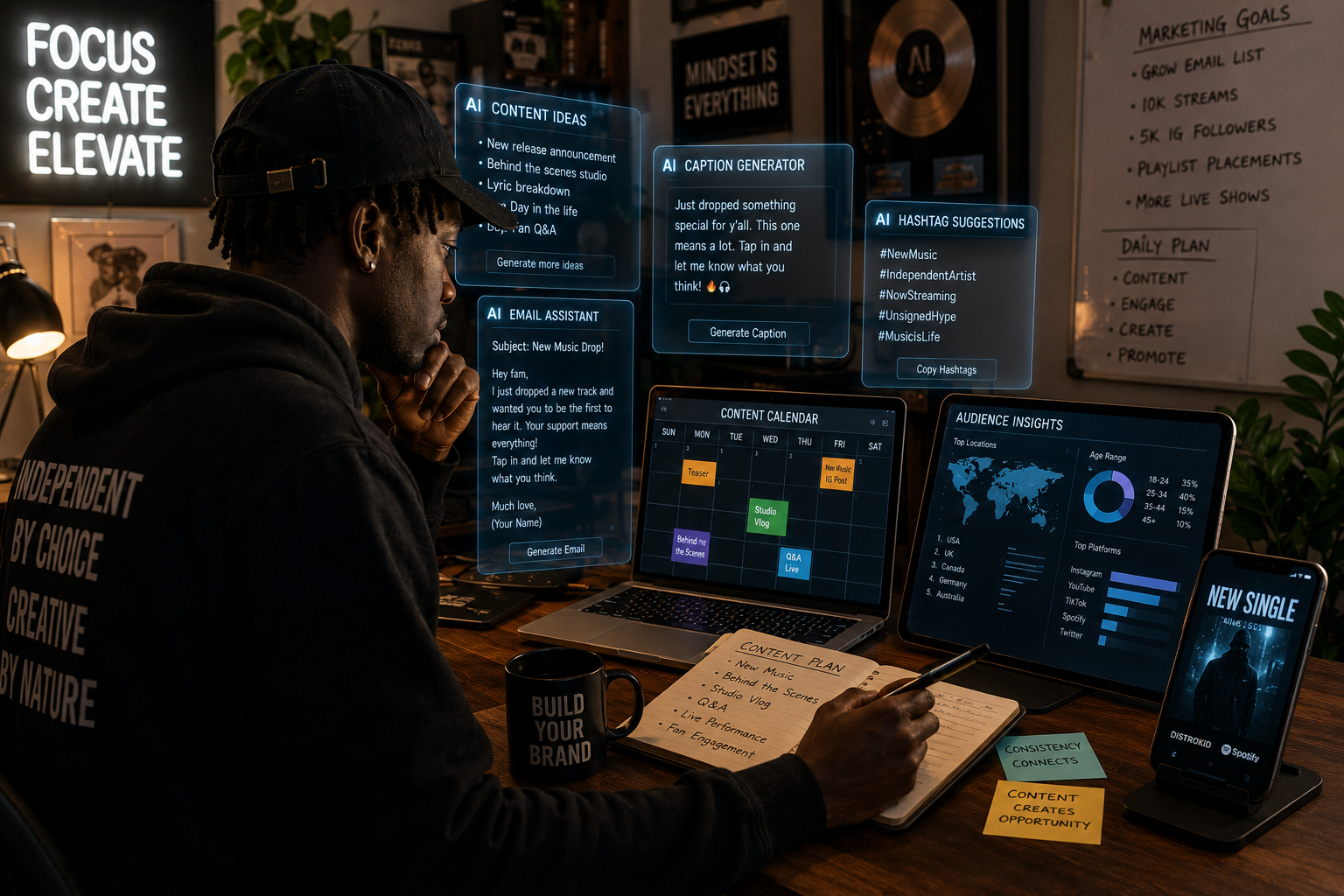
AI Won’t Build Your Career
One misconception surrounding AI is that it somehow creates success automatically.
It doesn’t.
AI can create graphics. AI can generate captions. AI can organize workflows. AI can speed up production.
What it cannot do is build genuine relationships with fans.
It can’t perform on stage. It can’t tell your story. It can’t replace your perspective.
The artists who benefit most from AI are those who use it to amplify their existing strengths rather than replace them.
The Business Side Of AI
The modern music industry rewards consistency.
Artists who release content regularly tend to remain visible. Artists who communicate with fans consistently tend to grow stronger communities. Artists who stay organized generally make better business decisions.
AI can help maintain that consistency.
A musician who once spent six hours creating promotional assets might now spend one.
A task that previously took days may take hours.
For independent artists operating without managers, assistants, publicists, or label support, those time savings can be significant.
Finding The Balance
The future of music isn’t likely to be entirely human or entirely artificial.
It’s probably both.
The most successful artists will continue creating authentic music while using technology to improve efficiency and reduce repetitive work.
AI should not replace creativity.
It should create more space for it.
At its best, artificial intelligence isn’t a substitute for artistry.
It’s a tool that allows artists to spend less time managing tasks and more time doing what they love: creating music.
Final Thoughts
Independent musicians have always adapted to change.
From home studios to streaming platforms, technology has consistently lowered barriers and created new opportunities.
Artificial intelligence is simply the latest chapter in that story.
Used responsibly, AI can help artists save time, improve workflows, strengthen marketing efforts, and operate more efficiently.
The artists who thrive won’t necessarily be the ones who avoid AI completely.
They’ll be the ones who learn how to use it without sacrificing the authenticity that makes their music worth listening to in the first place.