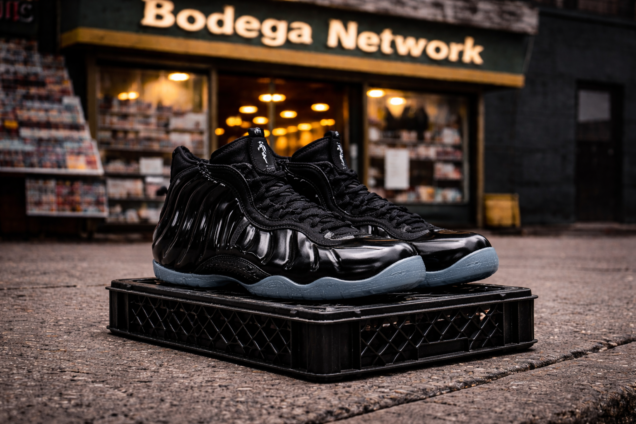
Deconstructing the Nike Foamposite
How it’s built — and what makes it different from every other Nike
Some sneakers are stitched together. The Foamposite feels like it was engineered.
When the Nike Air Foamposite One first released in 1997, it looked less like a basketball shoe and more like something from the future.
Even now, decades later, it still doesn’t look like anything else on the wall.
That’s because the way it’s built is fundamentally different from most Nike models.
Let’s break it apart.
The shell: the heart of the Foamposite
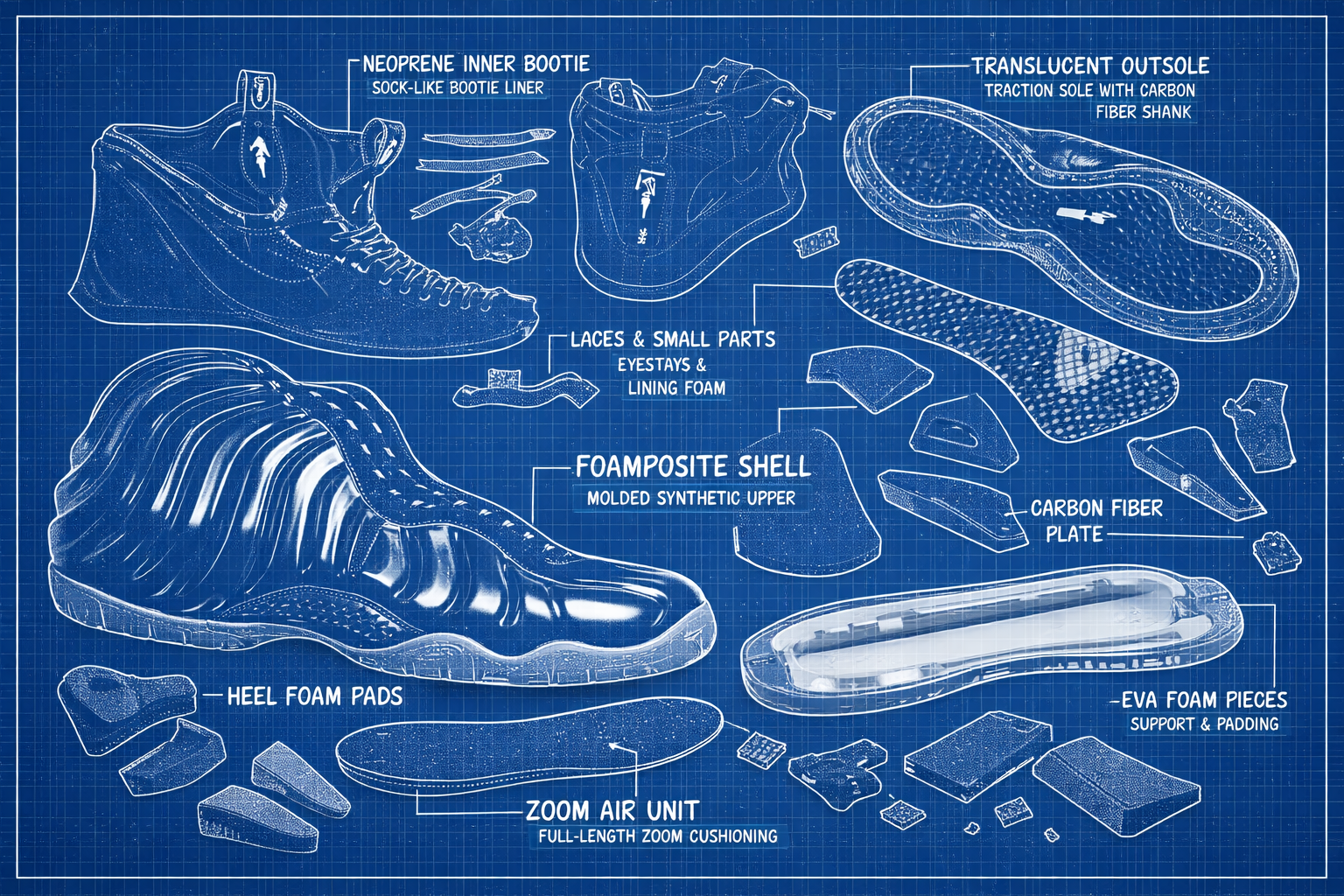
The most important part is the molded Foamposite shell upper.
Unlike traditional sneakers that use:
- multiple leather panels
- stitched mesh pieces
- suede overlays
the Foamposite uses a one-piece molded synthetic shell.
This shell is heat-formed into shape. That’s why it has that smooth, sculpted, wave-like body.
It almost looks poured instead of sewn.
The upper was inspired by the smooth lines of beetles and modern industrial design, giving it that futuristic organic shape.
This is what separates it immediately from shoes like:
- Air Force 1
- Jordan 1
- Dunk
- Air Max
Those are panel-built shoes. The Foamposite is mold-built.
The inner bootie system
Inside the shell sits a neoprene inner sleeve / bootie.
This is what gives the Foamposite its signature locked-in fit.
Instead of relying only on the exterior upper, Nike created a sock-like interior layer that hugs the foot.
This is why people often say Foamposites need a break-in period.
The shell molds around the foot over time. Once broken in, they feel almost custom-fit.
That’s very different from standard leather Nikes, which soften mostly through panel flex.
Carbon fiber midfoot plate
One of the most technical elements is the carbon fiber shank plate.
This sits under the midfoot and adds:
- torsional stability
- rigidity
- support during hard cuts
This feature was especially important because the shoe was designed for basketball performance.
It helps keep the foot stable without making the shoe collapse under pressure.
This is part of why the Foamposite feels more solid than softer Nike basketball models.
Zoom Air cushioning
Underneath everything is full-length Zoom Air cushioning.
That means the shoe combines:
- hard outer shell structure
- soft responsive cushioning underneath
That contrast is part of the glory.
Rigid on the outside. Responsive underneath.
Why it’s different from other Nikes
This is where the Foamposite separates itself.
Most Nike shoes are built from layered pieces.
The Foamposite is closer to industrial product design. It’s almost more like a piece of equipment.
That’s why it became so iconic in:
- basketball
- streetwear
- collector culture
The silhouette still feels futuristic because it never relied on the usual formula.
“Most sneakers are assembled. The Foamposite feels manufactured like armor.”
Final Word
The Foamposite stands apart because it is built around a molded shell system instead of stitched panel construction.
That one design decision changed everything:
- look
- feel
- performance
- cultural identity
It doesn’t rock like a normal Nike.
It doesn’t look like a normal Nike.
And that’s exactly why it became legendary.