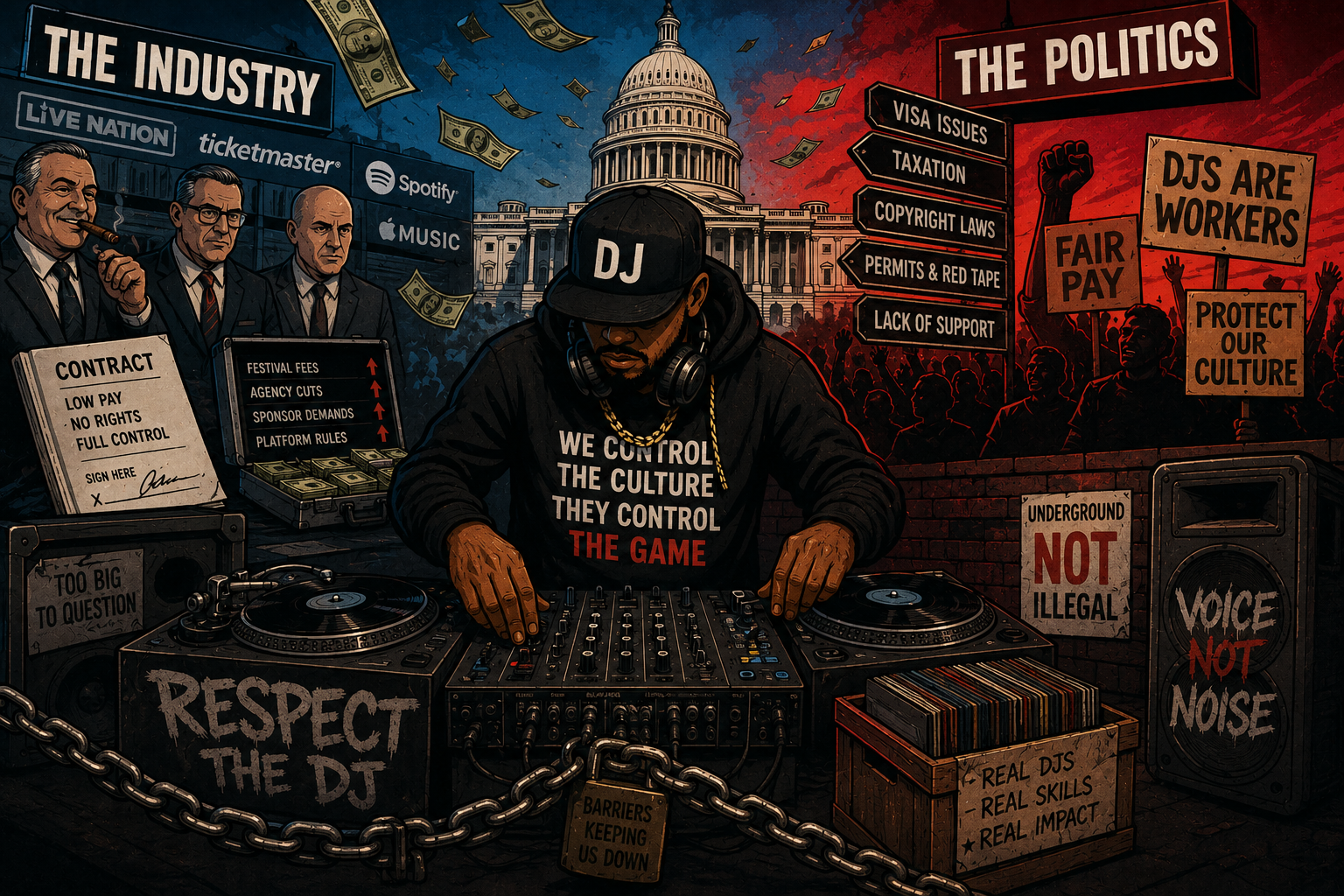
The Politics of Local DJ Scenes
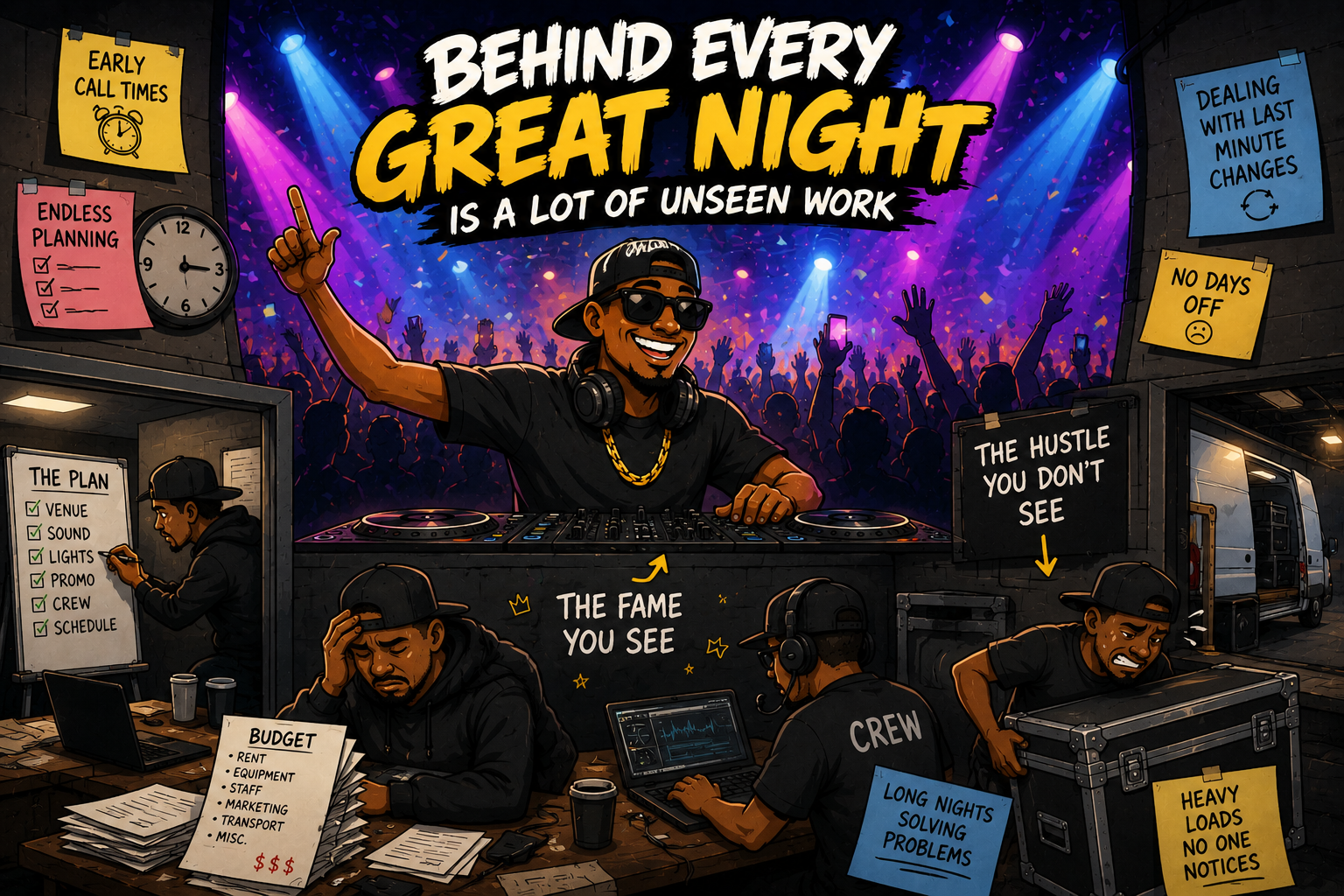
Everybody says they support each other.
Until the money gets involved.
From the outside, local DJ scenes can look unified. The flyers look clean. Everybody reposts each other’s events. DJs shake hands in the club. Social media captions talk about “family,” “community,” and “love.”
But behind the scenes, a lot of local nightlife cultures are built on quiet competition, bruised egos, survival tactics, and politics nobody wants to speak on publicly.
Because in smaller scenes, there usually is not enough room for everybody to eat comfortably.
So instead of building culture together, people start protecting positions.
That is where the politics begin.
The Undercutting Problem
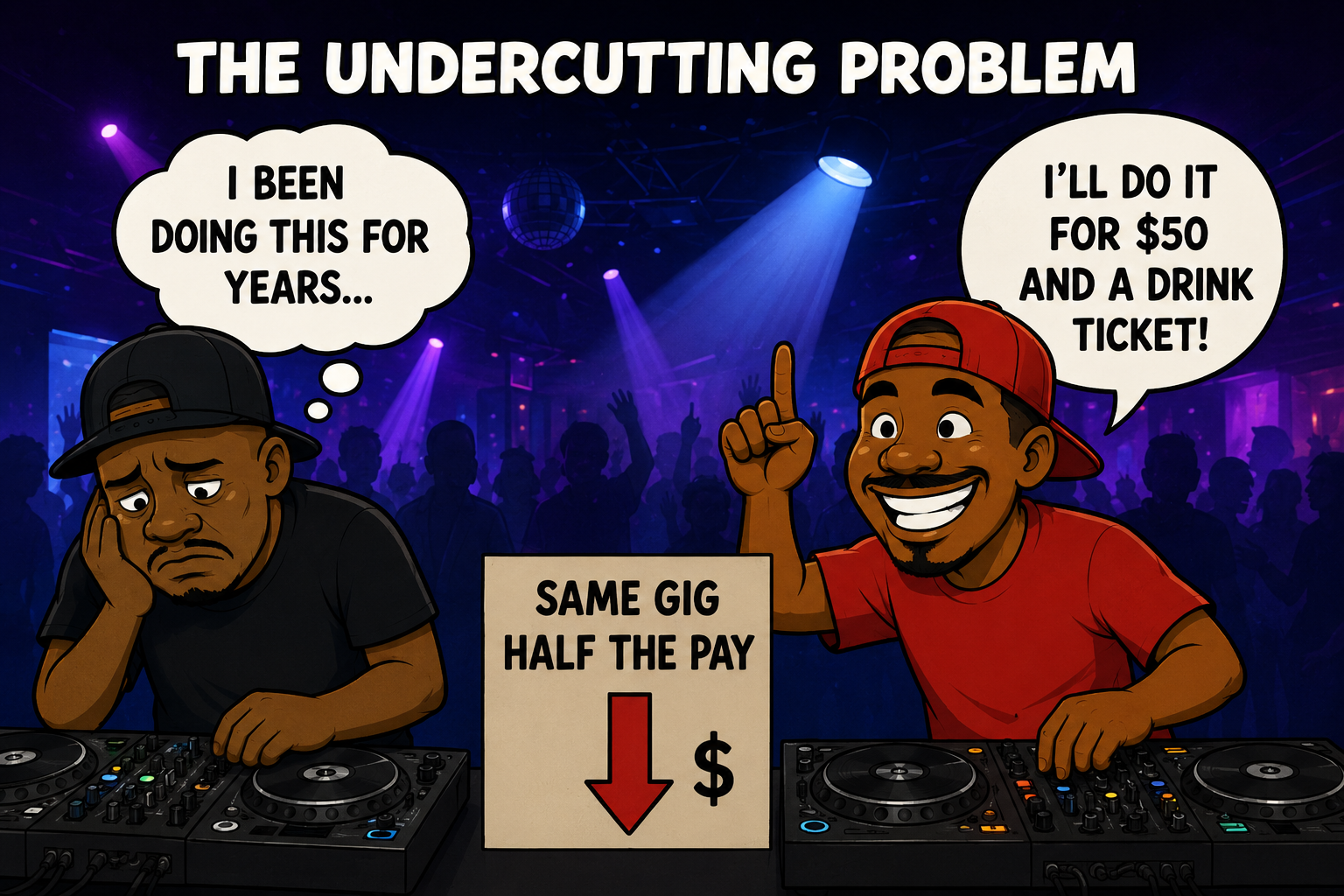
One of the dirtiest realities in local DJ culture is undercutting.
A DJ spends years building relationships, learning crowds, developing timing, buying equipment, promoting parties, and creating value for a venue — only for somebody else to come behind them offering to do the same job for less money.
Sometimes for half the price. Sometimes for free. Sometimes just for the opportunity to say they got the spot.
That desperation changes the market for everybody.
The problem is not competition. Competition is healthy.
The problem is when DJs become so focused on taking somebody else’s position that they stop valuing the profession itself.
Some DJs would rather get paid less if it means another DJ loses the opportunity completely.
That is not culture.
That is survival mentality.
And survival mentality eventually destroys the scene for everybody involved.
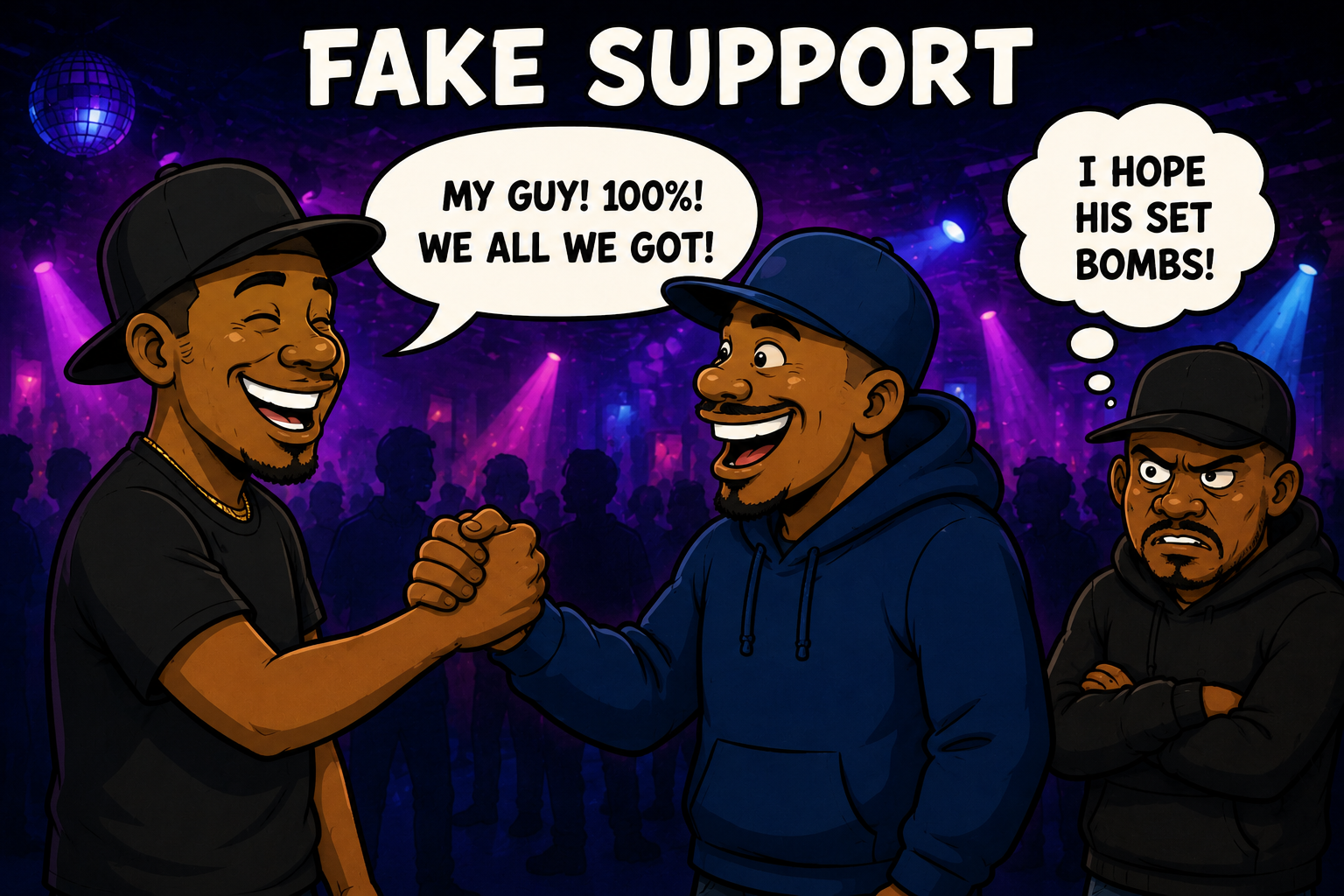
Fake Support Is Everywhere
A lot of local scenes are built on performative relationships.
Online, everybody supports each other. In person, everybody smiles. But privately, many people are rooting against each other.
That is the uncomfortable truth.
Some DJs only network when they need something. Some only show love when the cameras are on. Some secretly celebrate when another DJ loses a residency, loses momentum, or falls out of favor with promoters.
The fake support becomes exhausting because eventually everybody can feel it.
A lot of local scenes are not built on genuine relationships.
They are built on temporary alignment.
As long as the opportunities feel balanced, everybody acts cool. The second somebody starts gaining more visibility, better bookings, stronger crowds, or more attention, the energy shifts.
Now people start talking. Now people start hating. Now people suddenly have “opinions.”
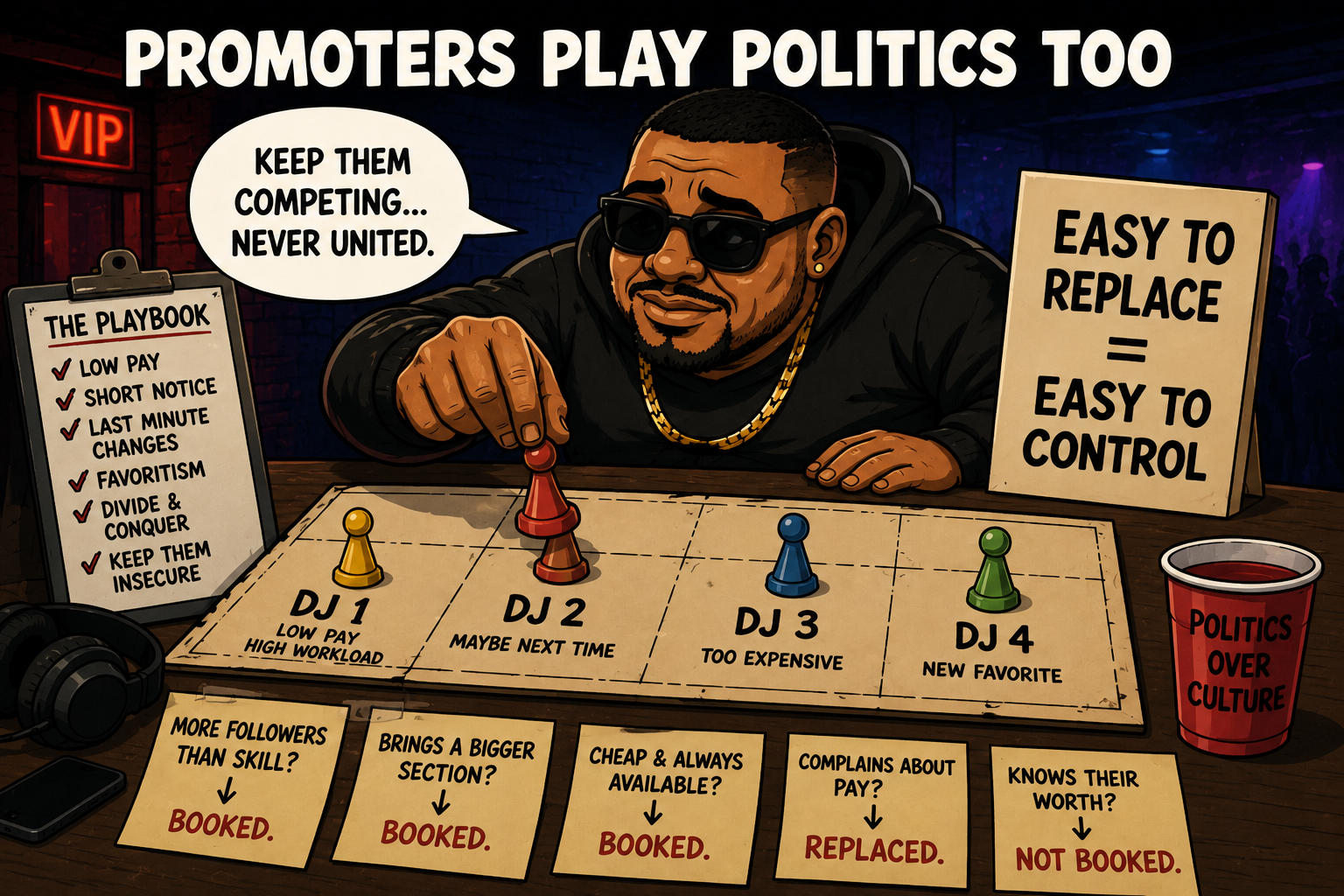
Promoters Play Politics Too
DJs are not the only ones contributing to the problem.
Some promoters intentionally create insecurity because insecurity keeps people easier to control.
If DJs feel replaceable, they become easier to underpay. Easier to manipulate. Easier to pressure into doing extra work for less compensation.
Some venues no longer look at DJs as culture drivers. They look at them as background accessories.
Who has the most followers? Who brings the biggest section? Who posts the best flyers? Who can work the cheapest?
Sometimes actual skill becomes secondary.
That creates an environment where branding starts replacing craftsmanship.
And once that happens, authenticity slowly disappears from the nightlife experience.
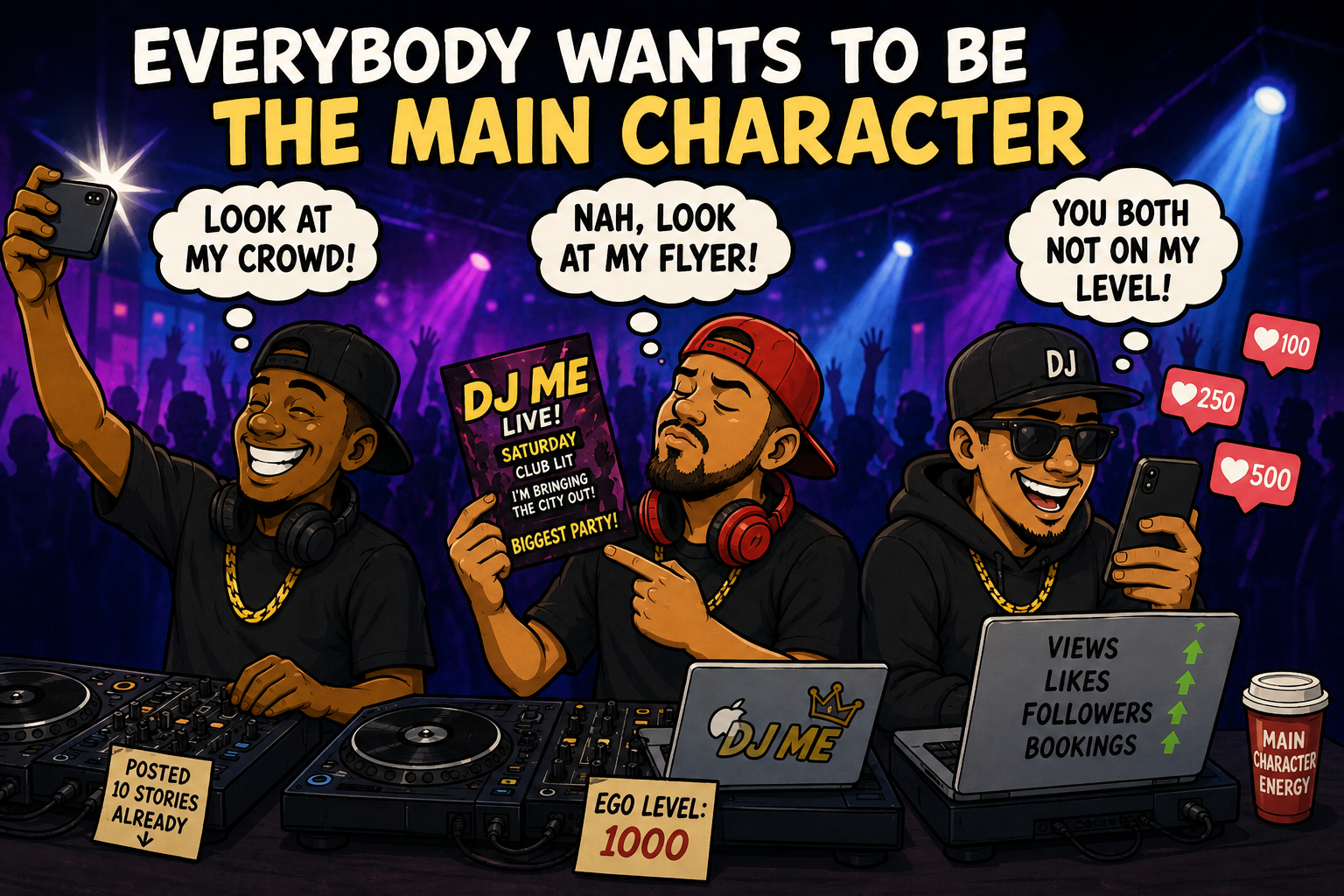
Everybody Wants To Be The Main Character
Social media made local DJ politics even worse.
Now everybody has a personal brand to protect.
Every flyer becomes a competition. Every event becomes a scoreboard. Every crowd photo becomes validation.
Everybody wants to look lit online. Everybody wants to look booked. Everybody wants to look important.
Meanwhile, many local scenes are actually shrinking underneath the surface.
Fewer truly original parties. Less collaboration. Less mentorship. Less creativity. More ego.
Some DJs refuse to support other DJs’ events because they are afraid of helping somebody else grow.
Some feel threatened by younger talent instead of helping develop the next generation.
Some want visibility more than they want culture.
That insecurity holds scenes back more than lack of opportunity ever could.
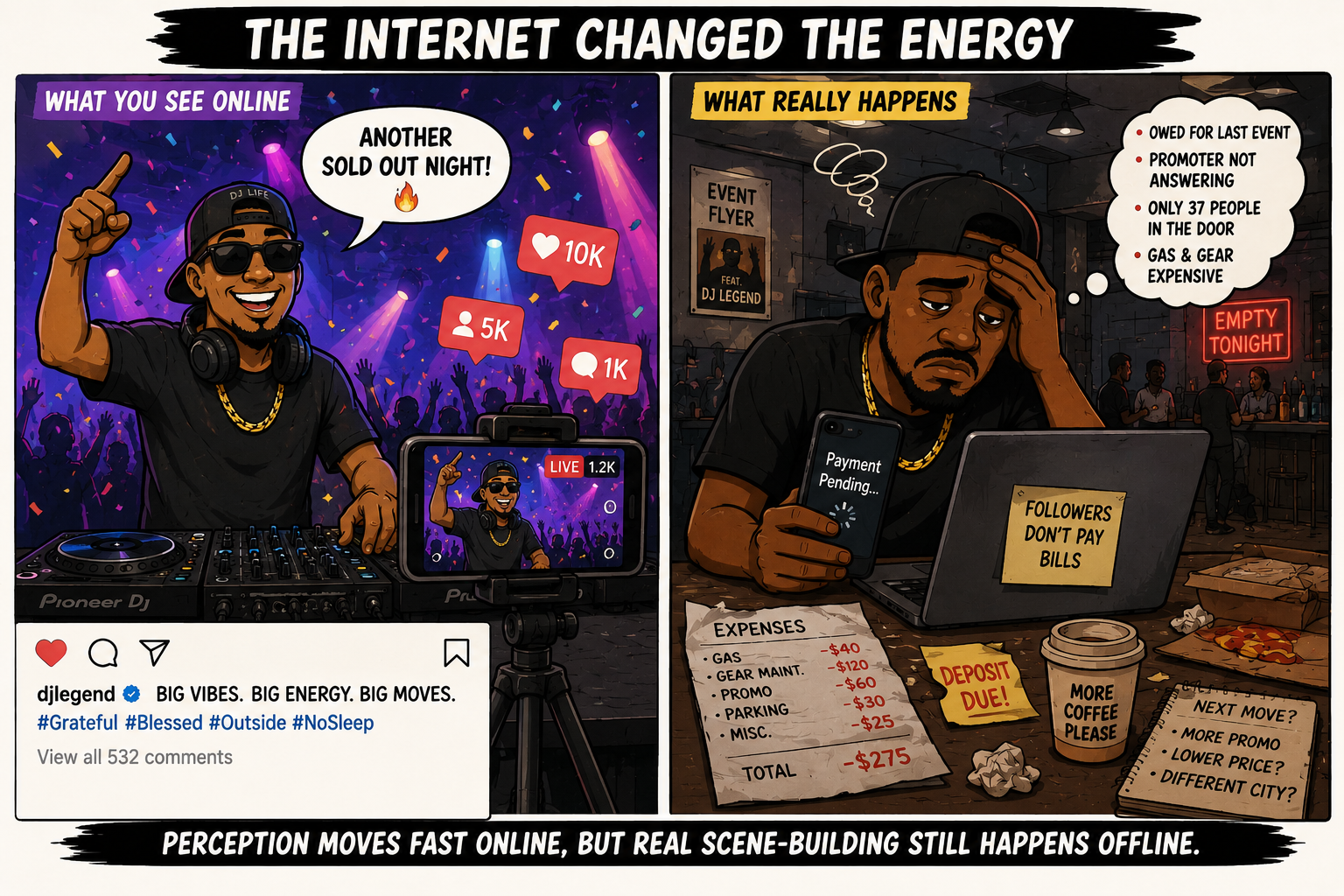
The Internet Changed The Energy
There was a time when DJs built reputations through consistency, crowd control, and word of mouth.
Now perception moves faster than reality.
A DJ can look successful online while barely getting paid offline.
A venue can look packed because of camera angles. An event can look legendary through edits and recap videos. A promoter can look powerful while owing half the city money.
The internet turned nightlife into performance art beyond the actual performance itself.
And while branding matters, many scenes became more focused on appearance than substance.
The result is a culture where everybody is trying to look like the biggest person in the room instead of actually building something meaningful together.
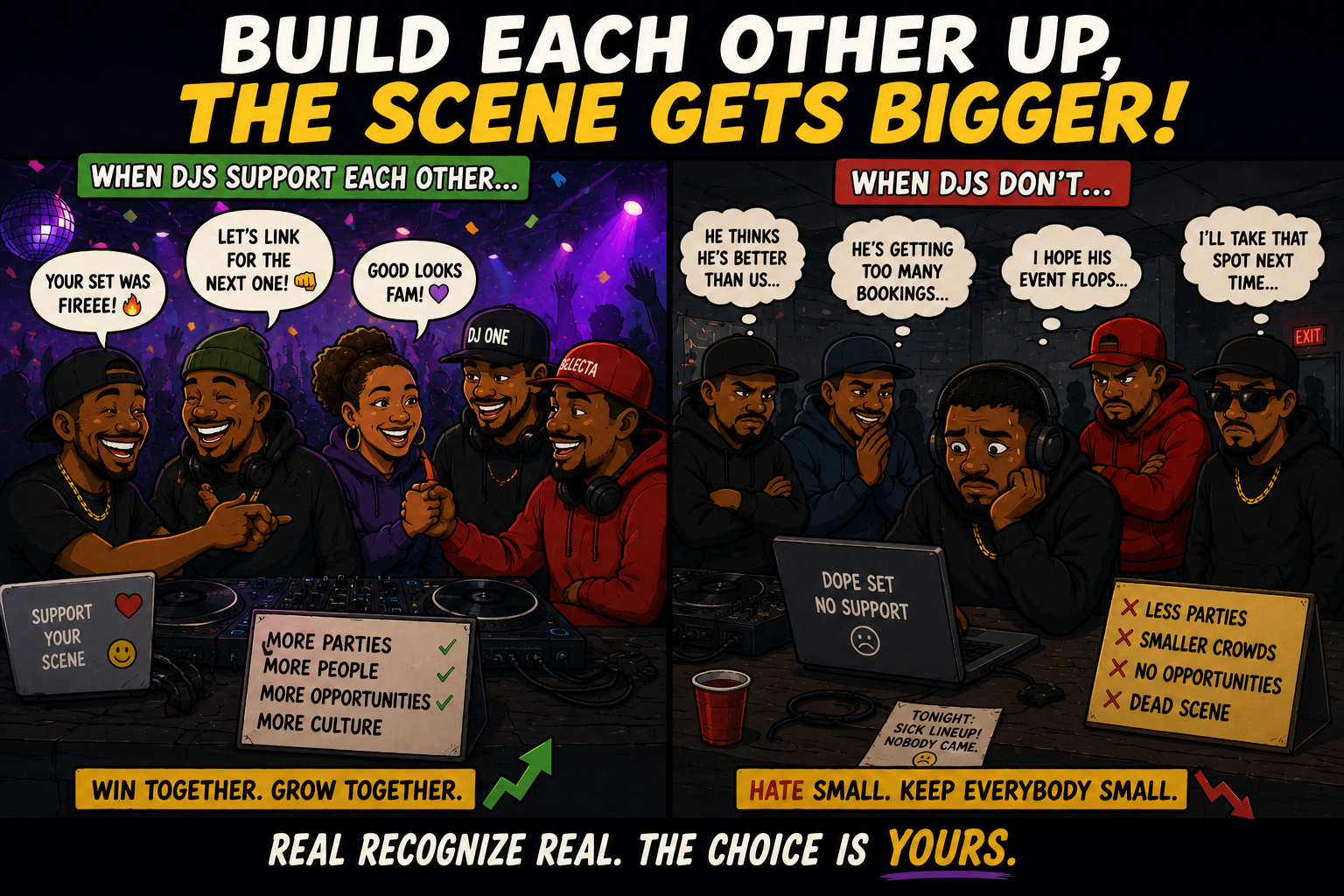
Real Scenes Are Built Different
The strongest music scenes in history were never built entirely on ego.
They were built on competition and collaboration existing together.
DJs sharpened each other. Artists challenged each other. Promoters built platforms. People supported movements bigger than themselves.
That is how scenes become legendary.
Not through silent hate. Not through sabotage. Not through undercutting. Not through fake relationships disguised as networking.
Real culture grows when people push each other to become better — not invisible.
Because eventually, scenes built entirely on politics collapse under their own insecurity.
And the saddest part is this:
A lot of local scenes have more talent than they realize.
But talent alone cannot grow in an environment where everybody secretly wants to survive alone.